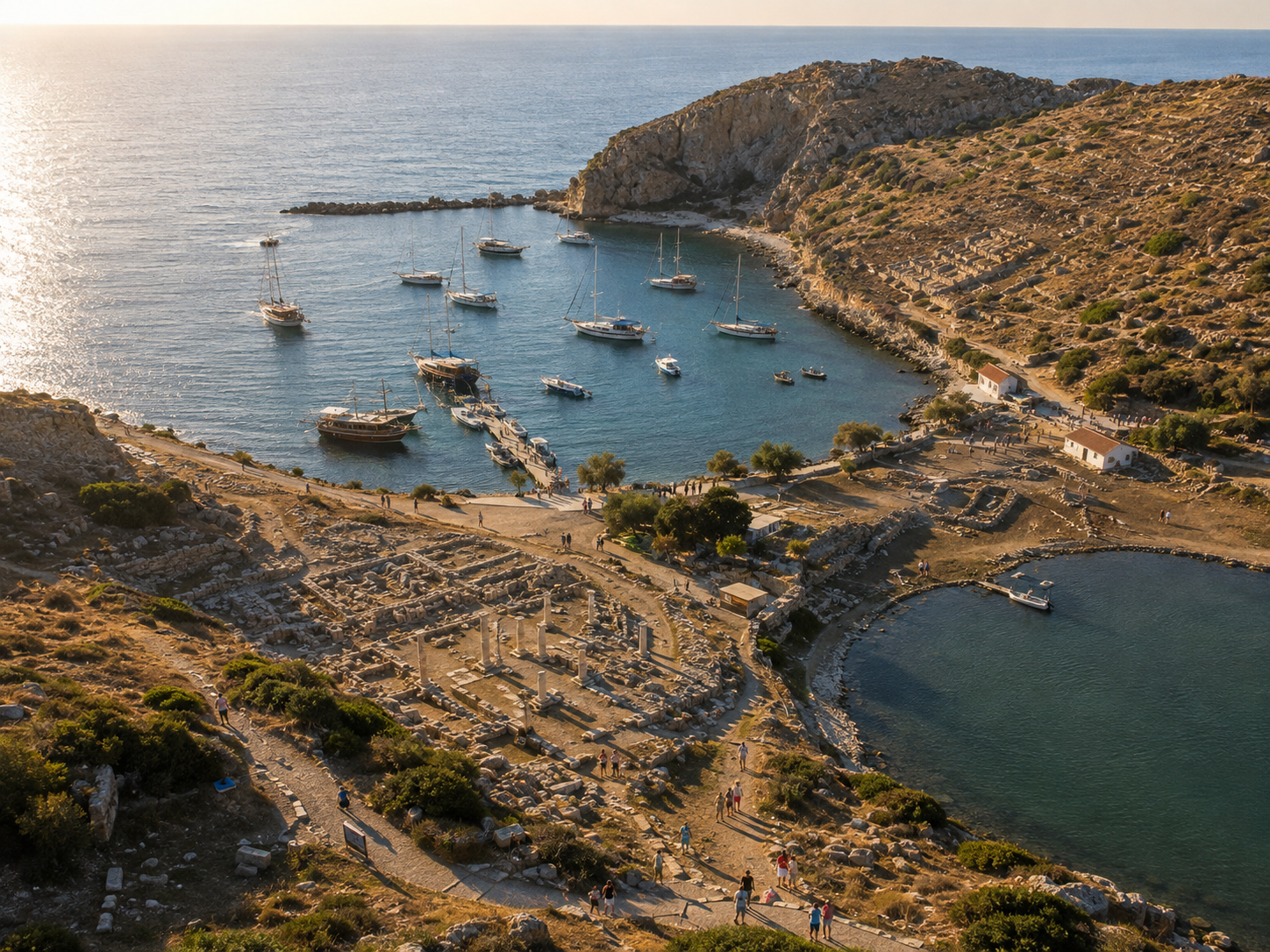
The ancient city of Knidos was founded in the mid-4th century BC at the very tip of the Datça Peninsula, on Cape Tekir, where the Aegean and Mediterranean seas meet. Thanks to its two natural harbors, the city became an important center of maritime trade, while also hosting some of the leading scientists of its era. The sundial developed here by the mathematician and astronomer Eudoxus symbolizes the city's place in the history of science. Sostratus, the architect of the Lighthouse of Alexandria, and the renowned physician Euryphon are also among the notable figures who lived in Knidos.
The city was also home to one of the ancient world's most respected schools of medicine. Knidos is further known for the Aphrodite of Knidos, made by the sculptor Praxiteles and considered one of the most famous statues of antiquity; although the statue itself is lost today, the temple ruins in the city shed light on this period.
Today, visitors can explore the city's walls, theater, agora, and harbor structures; its unique location, where the Aegean and Mediterranean can be seen at the same time, makes Knidos one of the most impressive historical stops in the Datça region.
Bu mekanı iyi tanıyorsanız yazılı anlatım, ses kaydı,
fotoğraf ve güvenilir kaynaklarınızla katkıda bulunabilirsiniz.
Rehberlik yetkisi her mekan için ayrı değerlendirilir.