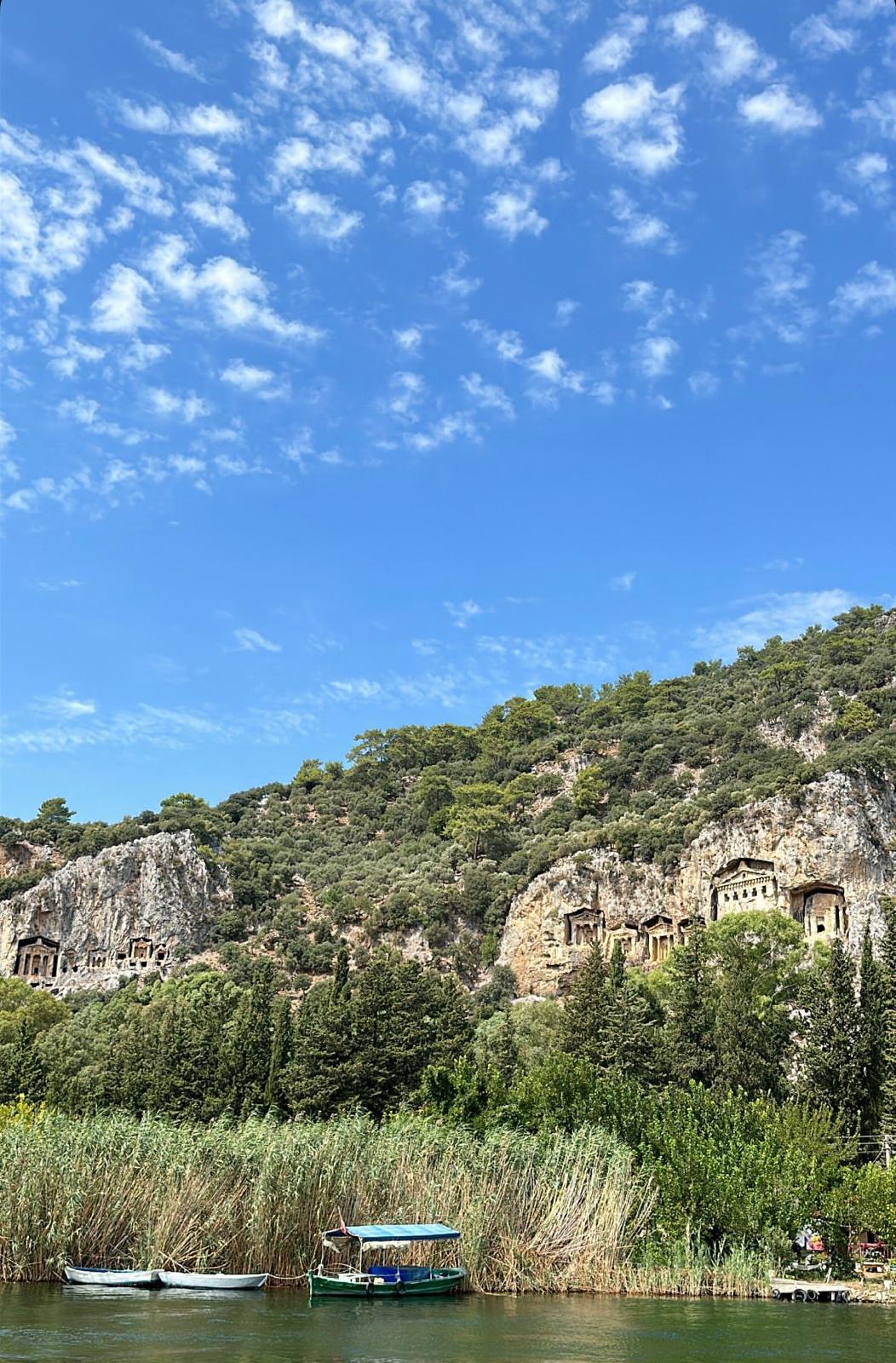
Kaunos is an ancient Carian city that, according to legend, took its name from Kaunos, the son of the King of Miletus, and is thought to have been founded in the 10th century BC. Due to its location, the city developed into an important center for maritime and salt trade; however, over time, the silting of the Dalyan Delta rendered the harbor unusable, and the city lost its commercial importance. A severe malaria epidemic that struck the region in the 15th century AD led to the city being completely abandoned. The ruins were rediscovered in 1842 by a British archaeologist.
The most striking feature of the city is its royal rock tombs, carved into the rocks in the 4th century BC in the form of temple facades. Bearing traces of the Lycian architectural tradition, these tombs are carved into the steep cliffs on the opposite bank of the Dalyan River and are among the most photographed spots on boat tours. The city also contains the remains of a theater, an agora, a bathhouse, and a basilica.
With both its ancient city ruins and its magnificent rock-cut tombs, Kaunos is one of the most important stops where the Dalyan region's historical and nature tourism come together.
Bu mekanı iyi tanıyorsanız yazılı anlatım, ses kaydı,
fotoğraf ve güvenilir kaynaklarınızla katkıda bulunabilirsiniz.
Rehberlik yetkisi her mekan için ayrı değerlendirilir.